Pirates Outlaws
- 4.2
- Rating
- 500.00K
- Installs
- $0.99
- Price

 Analysis by App-foxy
I spent time with Pirates Outlaws as a card game on mobile, paying particular attention to how comfortably it supports different players and different play situations. It is an indie roguelike card game from Fabled Game, built around short decisions, repeated runs, and the appeal of trying a new route after a defeat. That structure makes it easy to pick up for a few minutes, although its depth becomes more demanding once the early novelty fades.
The basic appeal is straightforward: you build and use a deck while moving through pirate-themed encounters, then adapt when a run goes badly. I like that the game asks me to think rather than simply react quickly. It feels closer to a compact strategy session than to a traditional casino-style card game, and that distinction matters when deciding whether it belongs on your phone. If you enjoy planning several turns ahead, managing risk, and learning from failed attempts, this is a strong candidate. If you want a relaxed game with little reading or a predictable path to victory, it may feel surprisingly intense.
How comfortably the game works for different players
I find the game most comfortable for players who enjoy taking their time with card choices, since it asks for little physical speed but rewards close attention. A larger screen and a quiet moment can make its compact card text easier to manage, while short, focused sessions help keep decisions from feeling muddled. That balance also clarifies the next question: which everyday situations make its deliberate pace an advantage, and when is it better to choose something lighter?
You May Also Like

 Google Keep - Notes and lists
Google Keep’s Quiet Growth Shows the Appeal of Simpler Notes
As mobile work gets busier, Google Keep keeps winning a simple contest: capture a thought quickly, find it later, and get on with the day.

 Blood Strike: 2.5 Anniversary
Blood Strike’s Loadouts Turn Every Drop Into a Tactical Gamble
A close look at Blood Strike’s custom loadouts: how fast access to signature weapons reshapes its battle royale rhythm, rewards preparation, and narrows the gap between fights.

 Pandora - Music & Podcasts
Pandora’s Music Is Easy to Start, but Harder to Recover
Pandora’s strength is its low-effort path from a seed to a station. Its weak spot is how much confidence it asks you to place in connection, setup, and quiet recovery.

 8 Ball Pool
 Is Built on Rivalries, Rematches, and Routine
A close look at the rivalries, rematches, shared routines, and unanswered safety questions that turn a quick pool match into a persistent mobile community.

 Samsung Music
’s Quiet Strength Is Playing What You Already Own
Its reach comes less from spectacle than from dependable access to a personal library. That simplicity is both the app’s strongest retention engine and its ceiling.

 AccuWeather: Weather Radar
AccuWeather Review: A Quick, Clear Forecast for Everyday Decisions
For everyday plans, the best forecast is the one you can understand quickly. AccuWeather makes rain timing, radar, and local conditions easy to act on, with a few trade-offs.
More From Our News Desk



Readability and navigation during a run
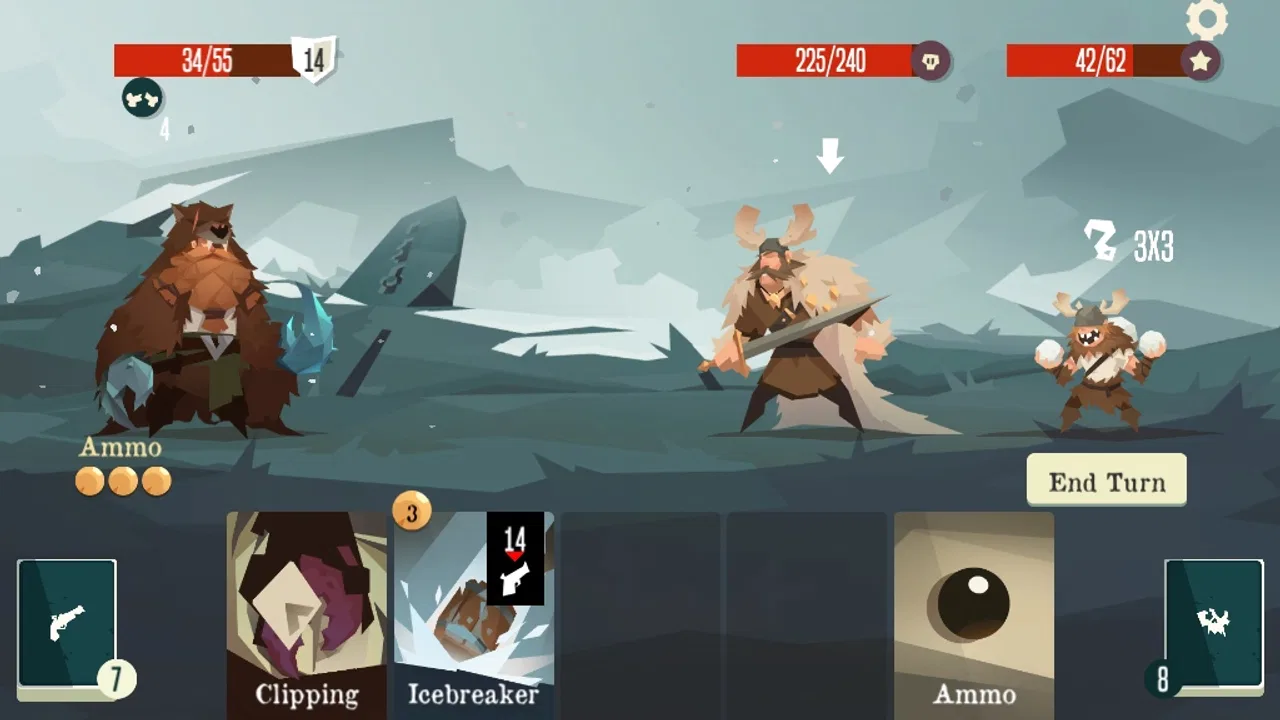
The card-based format gives the screen a clear purpose. Most of the important action is concentrated around the cards, available choices, and the current state of the run, so I rarely felt lost about what I was supposed to do next. That is a real advantage on a phone, where a cluttered interface can make even a simple game tiring. The turn-based rhythm also gives me time to inspect a choice instead of forcing an immediate gesture.
Still, clarity is not the same as simplicity. Each card can matter in relation to the rest of the deck, the current encounter, and the resources I am trying to preserve. A new player may understand the immediate button or card action but miss the longer-term consequence. I found that the game rewards reading carefully before committing, especially when a seemingly useful card creates a weaker deck later. The interface is approachable, but the decisions underneath it are not shallow.
For players who prefer visual organization, the card layout is easier to follow than a fast action game with several moving targets. I can pause mentally between decisions, compare possibilities, and return to the board without losing control of the situation. That makes it suitable for people who find rapid arcade games stressful or difficult to track. The trade-off is that a player who has trouble reading small text on a phone may need to enlarge the display or use a larger device, because card games communicate a lot through written effects and compact visual information.
Navigation becomes more demanding as the run develops. The game presents choices that are not always obviously good or bad, and learning what they mean takes experimentation. I would not recommend rushing through the first sessions while watching television, because the interface may look simple while the consequences are easy to overlook. The best approach is to treat the opening runs as a tutorial you create for yourself: read every effect, notice what changes after each decision, and remember which choices caused trouble.
Motor and sensory considerations
From a motor-control perspective, the turn-based design is welcoming. I am not asked to perform rapid swipes, maintain precise timing, or coordinate several controls at once. Tapping a card or option is generally more manageable than steering a character through a crowded action scene. That makes the game a reasonable choice for players who prefer deliberate touch input or who find fast reaction games uncomfortable.
There is also a useful mental pause built into the card format. I can examine a hand, consider a sequence, and choose when ready. That helps when fatigue, distraction, or slower decision-making affects play. It also means the game works well for someone who wants strategy without the physical pressure found in many mobile games.
The sensory experience is more mixed. The pirate presentation gives the game personality, but the practical information is still carried by small cards, icons, numbers, and text. Players with low vision, color-vision differences, or difficulty distinguishing dense visual elements should test whether the phone screen is comfortable before committing to long sessions. I would especially avoid playing on a dim screen or in a moving vehicle, since the combination of small details and changing light can make card effects harder to parse.
Sound is not central to understanding the decisions, which is helpful for players who play without audio. I could focus on the cards rather than relying on spoken instructions or important sound cues. That also makes it a better fit for quiet environments such as a waiting room or a shared home. However, silent play does not remove the need to inspect visual information, so it is not a substitute for strong text contrast or larger controls.
One practical tip is to separate learning sessions from casual sessions. When I am discovering a new deck or encounter, I give the screen my full attention. Once I understand the pattern, I can play more comfortably in short breaks. This reduces the cognitive load and prevents the common mistake of treating every run as background entertainment. The game is physically gentle, but it can still be mentally demanding.
Using it in everyday situations
This is where the roguelike structure works particularly well. I can start a run during a short break, make a handful of decisions, and stop when the moment ends. It does not require the same uninterrupted commitment as a long multiplayer match. A commute, a queue, or a quiet coffee break can all work, provided I am not in a situation where I need constant awareness of my surroundings.
I would not play it while walking, crossing a street, or doing anything that needs immediate attention. The game may wait for my input, but its choices still require concentration. In that sense, it is accessible in timing but not necessarily in context. A player can take their time, yet the game remains a poor companion for divided attention when the goal is to understand and improve.
It also suits people who prefer private, self-paced play. There is no social pressure to keep up with another person, and a failed run becomes information for the next attempt rather than an embarrassing public loss. That can make the learning curve feel safer for cautious players. On the other hand, anyone looking for a shared family card game may find the experience too solitary, since the appeal comes from personal decisions and repeated individual runs.
The paid entry point is another part of the context. The game costs $0.99, while optional in-app purchases range from $1.99 to $8.99 per item. I appreciate knowing that the initial purchase is modest, but I would still advise checking the purchase flow before handing the phone to a child. The age guidance is Everyone 10+, which fits the combination of accessible controls and strategic complexity better than a very young audience would. Younger players may handle the tapping easily while struggling with the reading and planning required to make sensible choices.
Where the learning curve creates barriers
The main barrier is not dexterity; it is understanding how small decisions accumulate. A card that looks strong in isolation may be less useful when it disrupts the rest of a deck. A safe-looking path may leave fewer options later. These are satisfying lessons once they click, but they can feel opaque during the first attempts. I sometimes wanted a clearer explanation of why a choice was dangerous rather than discovering the answer only after a poor outcome.
That friction is part of the genre, so I would not call it a flaw for experienced roguelike players. It is a limitation for people who expect the game to explain its systems step by step. If you usually prefer card games with fixed rules, visible scoring, and a clear campaign route, the repeated-run structure may feel like unnecessary uncertainty. A conventional puzzle game would be a better choice when you want each level to teach one idea and then move on.
Another barrier is the amount of attention needed to remember what has happened during a run. Players with memory difficulties may find it useful to slow down and establish a personal routine: check the current hand, identify the immediate threat, decide what the deck needs, and only then select a card. I found that this simple sequence reduced mistakes more effectively than trying to memorize every possible interaction.
The game can also be less comfortable for people who dislike failure as a teaching tool. Roguelike design expects experimentation, and a lost run is often the price of learning. I enjoy that loop, but I know players who would rather make steady progress through a story. For them, the pirate setting may be attractive while the structure remains frustrating. The right question is not whether losing is possible; it is whether you enjoy turning a loss into a better plan.
What works well for inclusive play
My strongest impression is that the game lowers physical demands without lowering strategic demands. That is an important distinction. Someone who cannot or does not want to play a fast action title can still engage with meaningful choices here, using simple taps and a generous decision pace. The card format also makes it easier to stop and resume mentally, even when a session is brief.
The game is less universally comfortable when visual reading, sustained concentration, or unfamiliar strategy systems are obstacles. I would encourage players to use the largest practical screen, keep the display bright enough for the card text, and avoid playing when tired. Those are ordinary adjustments, but they make a noticeable difference because the game places so much weight on reading effects correctly.
It is also worth separating accessibility from difficulty. A hard game can still be comfortable to control, and this one is a good example. The challenge comes from choices, uncertainty, and learning the relationships between cards, not from speed. That may make it a better fit for players who want demanding thought without demanding movement. It will not automatically suit someone who needs highly simplified information or minimal reading.
For families, I would treat it as a guided game rather than an entirely independent one for younger players. An adult can help explain why a card is useful now but harmful later, which turns the early confusion into a shared learning exercise. The age guidance of Everyone 10+ is a sensible boundary for that reason: the controls are approachable, but the strategy asks for patience and comprehension.
How it compares with familiar card-game alternatives
Compared with a traditional digital card game, this feels more personal and less focused on a fixed match against another person. The goal is not simply to play the strongest hand according to familiar rules. I am shaping a run, responding to surprises, and deciding how much risk I can tolerate. That makes it more replayable for me than a basic solitaire clone, but also less relaxing when I want a predictable five-minute diversion.
Compared with a collectible card game, the emphasis is different again. I am not primarily entering a competitive ecosystem or measuring myself against another player. The interest comes from adapting within the run and learning the game’s possibilities. Players who dislike competitive pressure may prefer this structure, while players who enjoy deck trading, social matches, or a constantly changing opponent may find it too inward-looking.
Compared with fast mobile action games, its accessibility advantage is obvious: no twitch reflexes are required. Compared with very simple puzzle games, however, it asks more from memory and planning. I would choose this when I want a portable strategy challenge, not when I need something I can play almost automatically while my attention is elsewhere.
What the current release means for new players
The game was released on March 5, 2019, and the current version is 4.13. It runs on devices using Android 6.0 or later, which gives it a relatively broad starting point for Android users. The long span since release and the substantial player response suggest that it is not an untested experiment: it has attracted over 500 thousand installs, holds a 4.2 average from around 32 thousand ratings, and has about 1.8 thousand written reviews.
I would not use those figures as a promise that every player will enjoy the learning curve. They are more useful as reassurance that the game has had time to establish its identity. The developer, Fabled Game, has built something with a clear genre focus rather than a loose collection of unrelated mini-games. That focus is a strength if you already know you like roguelike card play, but it means there is little reason to install it if you are searching for a broad all-purpose game.
New players should begin by learning one style of play rather than trying to understand everything at once. Pay attention to which cards help the current encounter, which ones improve the deck over several turns, and which tempting rewards create clutter. I found that this approach made the game feel less random. The run still contains uncertainty, but I became better at identifying which risks were deliberate and which were simply poor preparation.
My inclusive verdict
I recommend this game to players who want thoughtful card strategy in a compact mobile format and who are comfortable learning through repeated attempts. Its strongest accessibility quality is the calm physical interaction: tapping and reading replace rapid movement, and the turn-based structure gives room to think. That makes it a particularly good alternative for someone who enjoys challenging games but does not want reaction-heavy controls.
I would skip it if you need large, effortlessly readable information, dislike repeated failure, or want a social card experience with simple rules. I would also choose a lighter puzzle game for moments when my attention is divided. The game is welcoming in pace but demanding in concentration, and confusing those two qualities could lead to disappointment.
For me, the best use case is a quiet break with enough time to make decisions properly. I can play one run, notice a mistake, and return later with a more sensible plan. The low upfront price makes that experiment easy, while the optional purchases mean I would keep an eye on spending if someone else uses the device. Overall, this is a strategically deep card game with low motor pressure but a real reading and planning commitment. If that balance matches what you need, it is worth giving the pirate voyage a careful try.
FAQs for Pirates Outlaws
01What is Pirates Outlaws, and what type of game is it?
Pirates Outlaws is a single-player deck-building roguelike for Android and iOS that combines turn-based card battles with pirate exploration. You choose a character, build a card deck, collect relics, manage ammunition, and fight through procedurally arranged encounters. Each run can unfold differently, so the game rewards planning, experimentation, and learning from failed attempts rather than relying only on quick reflexes.
02Is Pirates Outlaws free to download and play?
Pirates Outlaws is generally offered as a paid mobile game, although availability, pricing, and promotions may vary between Google Play and the App Store. The purchase model is designed to provide access to the main experience without making energy timers or constant advertising the center of progression. Before downloading, check the current store listing because regional prices, optional purchases, and platform policies can change.
03Can I play Pirates Outlaws offline?
Much of Pirates Outlaws can be played offline, which makes it suitable for travel or situations without a reliable internet connection. The core battles, map exploration, and progression are designed as a solo experience. However, store verification, updates, cloud-related features, or platform services may still require an internet connection occasionally. It is best to launch the game online after installation and updates.
04Is Pirates Outlaws difficult for new players?
Pirates Outlaws can be challenging, especially during the first several runs, because enemies punish poor resource management and weak deck choices. The difficulty comes from understanding card synergy, ammunition limits, character abilities, relic effects, and when to avoid unnecessary fights. New players should expect some failed attempts, but those runs are useful because they unlock knowledge, strategies, and eventually stronger options.
05Does Pirates Outlaws offer enough content for long-term play?
The game provides substantial replay value through multiple heroes, distinct card pools, different maps, enemy groups, events, bosses, and changing run conditions. Each character encourages a different strategy, while deck-building choices can produce very different play styles. Players who enjoy roguelikes and card games will likely find plenty to explore, although the repeated-run structure may feel less appealing if you prefer a linear campaign.
Pros
- Distinct card-based combat with varied pirate characters and playstyles.
- Many maps
- enemies
- and game modes provide plenty of replay value.
- Runs are easy to start and suitable for short gaming sessions.
- Unlockable cards and characters make progression feel consistently rewarding.
- Offline play is convenient when you do not have an internet connection.
Cons
- Random card draws can make some runs feel unfair or overly dependent on luck.
- The learning curve may be steep for players unfamiliar with deck-building games.
- Energy and progression systems can slow access to some content.
- Visuals and animations are functional but may feel dated on newer devices.
- Repeated runs can become grindy when trying to unlock everything.

Pirates Outlaws
Gallery